
This is late my bad but just had to share!
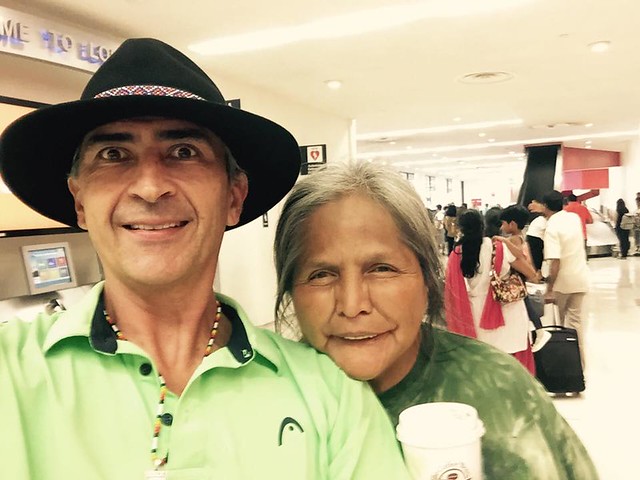 waiting on students
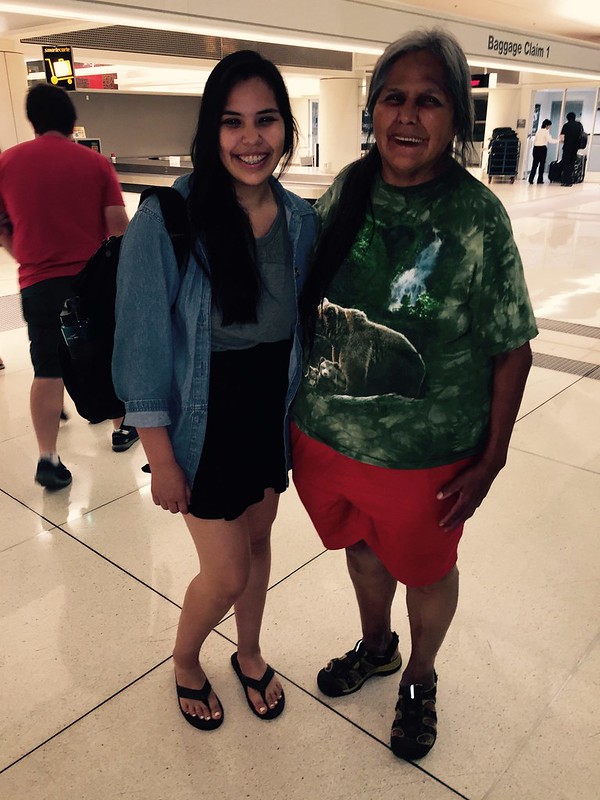
Rose with a student at the airport
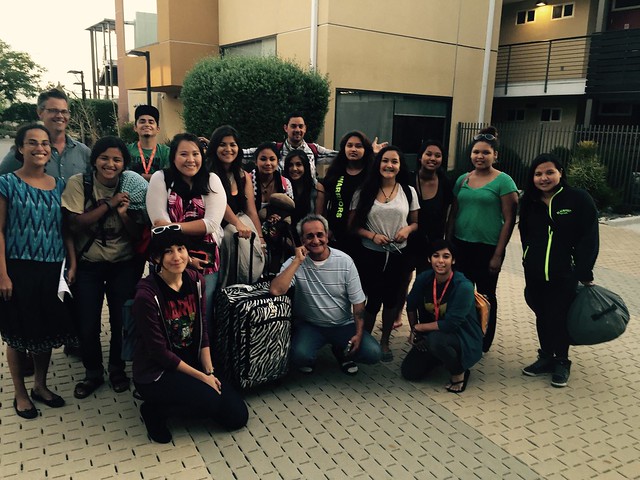
All the Lummi Girls on the 11th
This is late my bad but just had to share!
waiting on students
Rose with a student at the airport
All the Lummi Girls on the 11th
One of the themes that has been present throughout the program so far is giving thanks, whether to our Elders, before eating a meal, or when we wake up in the morning.
So now it is time to give thanks to our funders. Because of their generosity and faith in the program, we can offer unique opportunities for our Native youth this summer and beyond.

San Manuel Band of Mission Indians has been a strong and continual supporter of the Pipeline Program since day 1!

Soboba Band of Luiseno Indians has also seen that the vision and mission of the Pipeline Program is one to support for the future generations.


Lummi Nation and the Lummi Youth Academy are both recent but strong supporters of the Pipeline Program, entrusting us with a big group of their students. Thank you!


Thank you to both the Assistance League of Bellingham and the Whatcom Community Foundation for supporting the travel and journeys of the Lummi girls as they learn and grow.
The CHIAT FOUNDATION – one of our small local foundations, the Chiat Foundation has supported the program continuously. Thank you for choosing to support small and local!
These Individual Donors from Washington State who have generously supported the travels and experiences of the Lummi students.
Deborah L Granger
C.A. Peter Granger
Donald Paulson
Claudia Callahan
Ursula Zvilna
Beth Brownfield
Gary Piazzon
Dianne Deseck Piazzon

The Wishtoyo Foundation is responsible for the Chumash Village in Malibu, CA. We have teamed up with Wishtoyo since 2013 to spend a few days at the Village learning about marine science and Chumash culture. They have been amazing hosts and the food is always the best. Thank you for always hosting us in a good way.
 Our continual host campus and organization – Pitzer College. More specifically, the Community Engagement Center has been our command base and the Dean of Faculty’s Office has supported our endeavors as well. Gloria Gold – Hello Gold Center next to our dorm! – has also generously supported the Pipeline Program in its mission to educate Native youth.

Western University of Health Sciences is our partner in the program and helps us with getting grants and managing funding. They also provide the awesome and interesting health science curriculum. So far we have learned about genetics and diseases, both fascinating topics and good introductions into the health fields.
Claremont, CA (July 12, 2015)—Twenty Native American high school students arrived at Pitzer College today for a two-week residential program that is designed to prepare them for success in higher education—both academically and culturally.
The Pitzer College/WesternU’s Native American Summer Pipeline to College Program, co-sponsored by Western University of Health Sciences and run by Pitzer’s Community Engagement Center, will focus on the humanities and health sciences while helping students build academic skills for college. The Pipeline Program is the only program of its kind with a Native science component, which encompasses traditional approaches in areas such as the environment, marine life and food.
The Pipeline Program goes beyond the standard approach to academics. According to Program Director Scott Scoggins ’10, the Pipeline Program draws on Native American scholars and Elders’ wisdom to contribute cultural knowledge and traditional ways of learning within the academic environment. Two Canadian Elders—Rose Henry (Tla’ A’min Nation (Sliammon Territory)) and Joe Thorne (Cowichan/Nuu-chah-nulth)—are the program Elders-in-Residence, who offer students and mentors alike opportunities to learn from Elders in an informal setting. On July 24, the Elders will also co-lead a rally for Idle No More, a grassroots movement dedicated to building Indigenous sovereignty and protecting the environment.
“To succeed in life, you need to be strong in your culture,” Scoggins said. “We can’t prepare the students properly unless they’re backed up by their culture.” Scoggins himself is of Pipil Nahuat, Pocoman Maya and English ancestry.
The program, now in its seventh year, offers a new component this year called Generation Indigenous (Gen I), a White House initiative in collaboration with the Center for Native American Youth and the Aspen Center. To meet Gen I’s challenge to support college access and youth development, the Pipeline Program youth will create a booklet, “A Survival Guide for Native American Youth by Native American Youth.” The booklet will encourage students to express themselves through writing and tell their own stories. Five mentors, some of them former Pipeline students, will assist.
Other programming includes reflective essay writing drawn from the reading The Absolutely True Diary of a Part-time Indian by Sherman Alexie, an earth science class with Elder Kim Marcus (Santa Rosa Cahuilla) and Elder Barbara Marcus (Spokane), building a Tongva kiiy and rabbit loom with Tongva Elder Barbara Drake and an ever-popular media studies course on blogging led by Pitzer Media Studies Professor Gina Lamb. At Western University of Health Sciences, students will learn about the Thrifty Genotype hypothesis, population genetics and different health careers.
Students will also visit Wishtoyo Foundation’s Chumash Village in Malibu for a three-day camping experience in traditional Chumash homes called “aps.” They will study plant identification, marine biology conservation and land stewardship.
Over the years, Scoggins has seen once shy young people who often lack trust in academia transformed through their shared experiences in the program.
“I see strong young people with hope for the future, with confidence in an academic setting and with their culture backing them up to make them even stronger,” Scoggins said.
For more information, please visit:
http://pitweb.pitzer.edu/cec/native-american-engagement/
www.westernu.edu/ladder-american-indian/about.php
Pitzer College is a nationally top-ranked undergraduate liberal arts and sciences institution. A member of The Claremont Colleges, Pitzer offers a distinctive approach to a liberal arts education by linking intellectual inquiry with interdisciplinary studies, cultural immersion, social responsibility and community involvement. For more information, please visit www.pitzer.edu.
This Sunday July 12th 2015 at Pitzer College! 
I would like to Introduce Alysha White as a Mentor for the 2015 Pipeline Program!

My name is Alysha White and I’ll be one of your Mentors for the 2015 Pipeline Program. I am Diné from St. Michael’s and Ganado, AZ but grew up in Albuquerque, NM. I currently go to school at the University of Arizona in Tucson as a Film/TV Major and prospective Business Minor. I enjoy a lot of activities: softball, volleyball, theatre/film production, photography, reading, and watching movies. I am a huge fan of superheros (my favorite is Iron Man), Harry Potter, Star Wars, Hunger Games, and a lot more. I am super into movies and actors but I also love traveling, meeting new people, and building relationships. I am super excited to be among an awesome group of mentors and to meet each and every one of you in the next few weeks!
Good Evening Pipeline Familia,
It’s been a while since we’ve been posting on the blog – things have been busy busy.
But we now have our 2015 Pipeline Program cohort and mentors.
In the next few posts, I will be presenting our Mentors – one of them will be your future mentor during the program, so pay attention! 🙂
Parents, now you can have a better idea of these well-qualified, strong mentors who will be looking after your students!
Elizabeth
I would like to introduce Miahuatl Kuauhtzin as a 2015 Pipeline Program mentor!
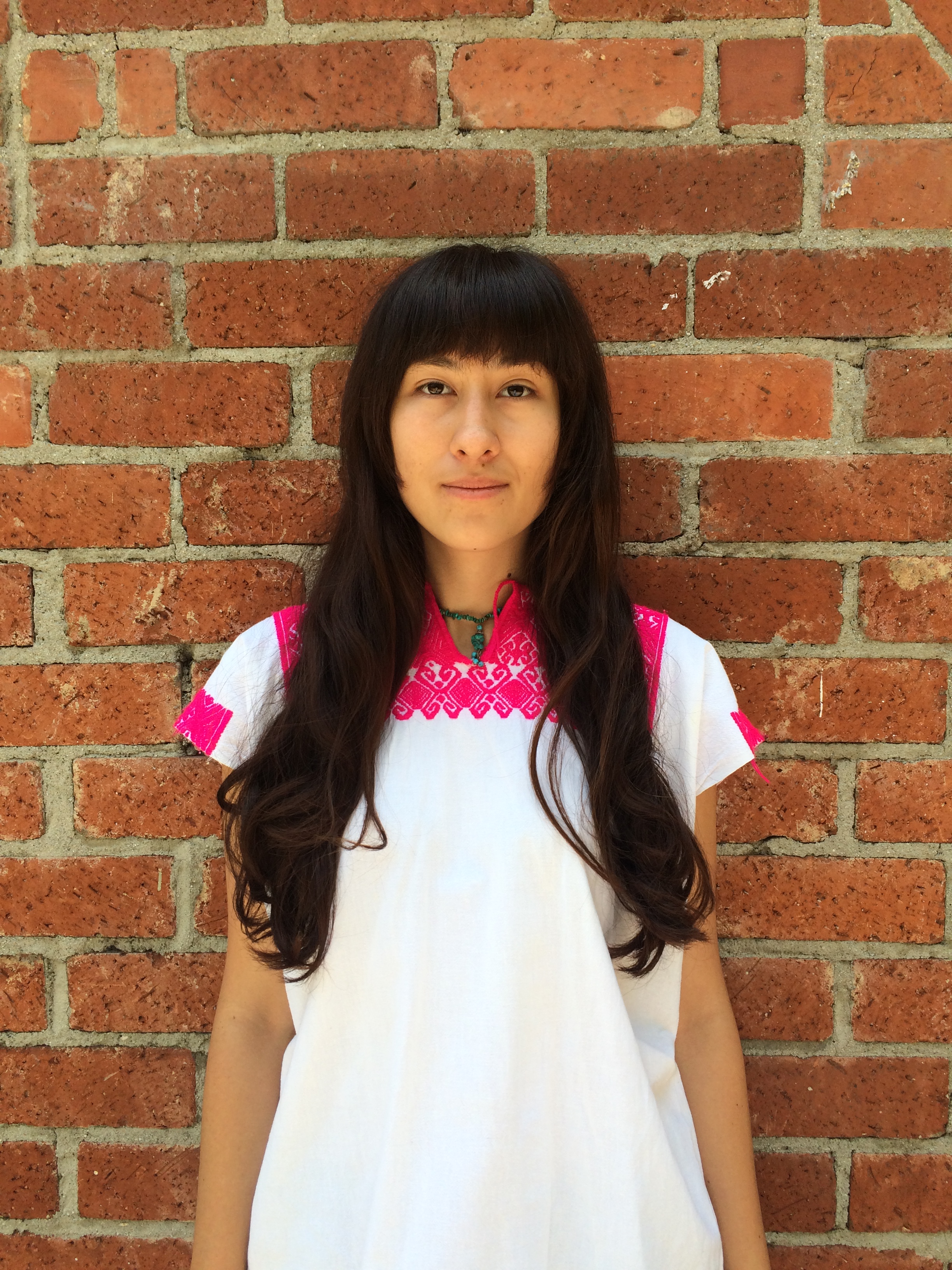
I am a Mexica-Azteca born and raised in Los Angeles, CA, with my two younger siblings. Through the efforts of my parents, I grew up immersed in my culture. Up until the twelfth grade I attended a school founded by my parents, Academia Semillas del Pueblo, which represents a community-based response to the international call for indigenous education. At school I was able to learn my mother tongue Nahuatl, our traditional dances and instruments, and our history and traditions. Despite growing up in a loving and accepting school, I am no stranger to the discrimination and struggles of my People. I have spent much of my time fighting for indigenous and human rights.
My greatest honor continues to be serving as a leader for my community by participating in the United Nations Permanent Forum on Indigenous Issues and organizing our traditional ceremonies. I continue to give back to my community often volunteering at Anahuacalmecac International University Preparatory and helping to organize MEChA de UCLA’s Raza Youth Conference. I have traveled to different parts of the world and the United States, like New York, Canada, China, and Mexico. I am currently an undergraduate at UCLA with a major in Chican@ Studies. I am working towards becoming a Veterinarian with a specialization in indigenous traditional medicine for animals.
I would like to introduce Pedro Garcia as a 2015 Pipeline Program mentor!
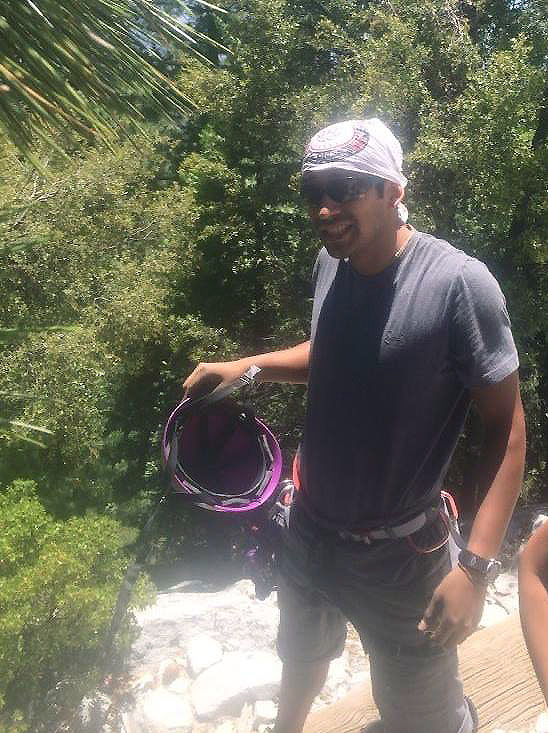
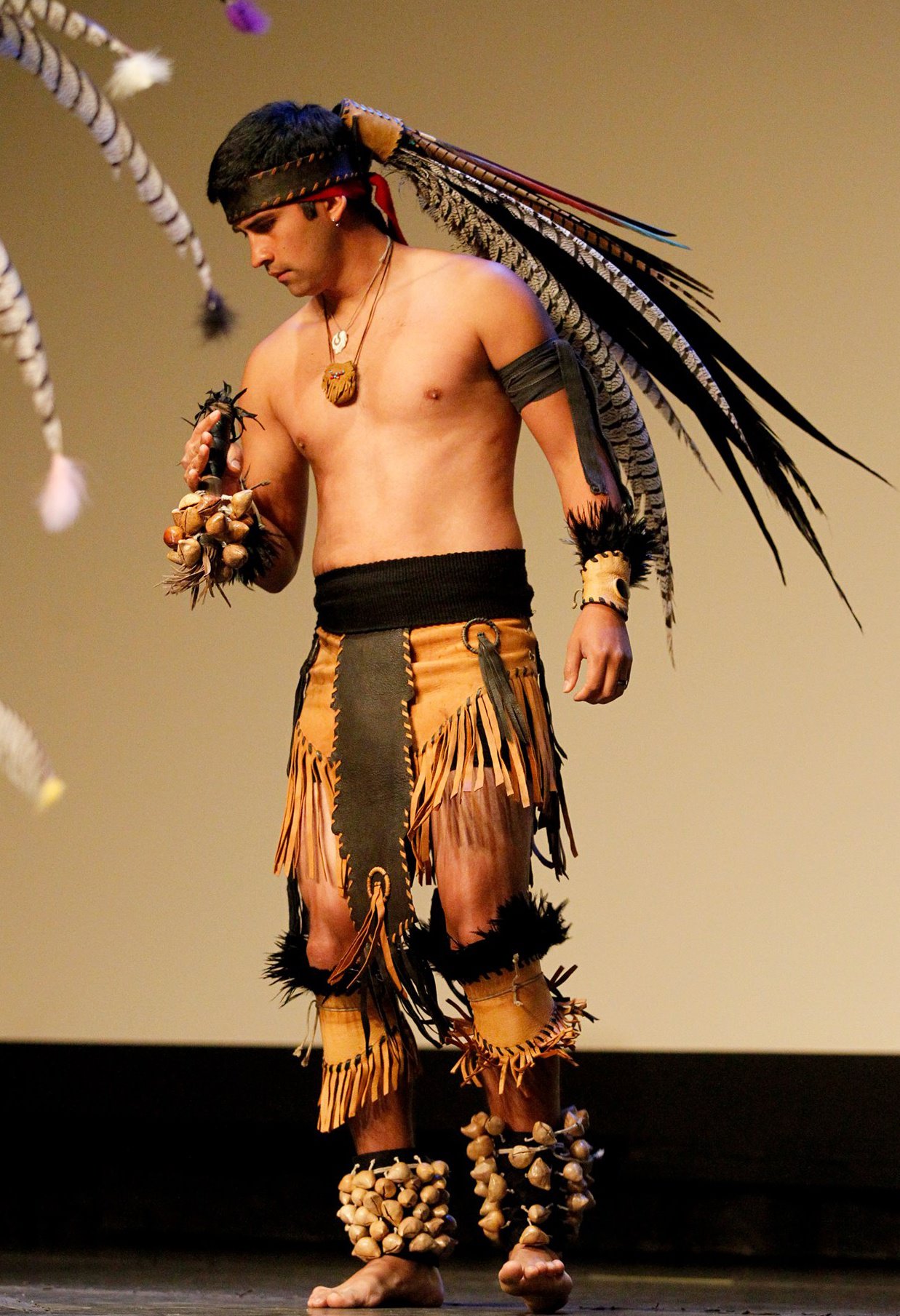
My name is Pedro Garcia and I was born in Cruz Quemada, Guerrero, Mexico. Although I only lived there for a few years, I take pride in knowing that my first breath, steps, and words were on the lands of my ancestors. Because of the steady increase in violence and drugs in my home state, my parents believed a life away from Mexico would be the best option for raising a child. I received all of my K-12 education in Paso Robles, Ca, and it was there, in Georgia Brown Elementary School, that my love of birds blossomed. I still remember that sunny evening, on the walk back home from another 4th grade-filled day, coming face to face with my first raptor, a Red-tailed Hawk.
That curiosity I had in raptors, and later birds overall, would eventually lead me to obtain my B.S. degree in Biology: Ecology, Evolution, and Organismal science at CSU, Fresno. Currently, I am finishing my Master in Biology: Urban Ecology, researching the effects that urban noise and socioeconomics have on local bird populations. Through this type of work, I hope to add to the knowledge that is currently known about the effects of urban development to our natural surroundings.
Apart from Biology, my other passions include working with minority/Native American youth, helping them keep a firm grasp of their culture, and merging that knowledge with biology and conservation. I am an active Aztec dancer and drummer here in Fresno, CA and use both my teachings in Native American culture and knowledge in the field of Biology to reach out to our young and growing leaders. In 2007 I became involved with the Peace and Dignity Journeys, an Indigenous run that lasts 7 months and spans all of North and South America. As an organizer and core runner, I do my best to help bring awareness of our people’s struggles, one mile at a time.
I would like to introduce Christa McGowan as a 2015 Pipeline Program mentor!

#schoolpic
Hello, My name is Christa McGowan. I am currently a junior at Chaffey College and I am
studying Technical Theatre. I am working towards a Certificate in Technical Theatre and an AA in Theatre Arts. I live in the city Claremont and I come from the Iowa Tribe of Kansas and Nebraska. For the past 4-ish years I have been a participant in Pitzer College’s Native Pipeline. I have many interests including art (I like drawing, painting, writing, reading, interacting with music, and watching movies/plays), video games (mostly PC/XBox360 games like League of legends, minecraft, Call Of Duty Black Ops, and Amnesia), and I love the outdoors such as hiking and biking. I consider myself to be a traditional, fun-loving, and creative person. I hope we can all get along and create many new connections through our Pipeline Family!
 nativeyouth2college.org