Blog

Our elders taught them.

19732889006_d2bca54879_oTlatzohkamate to tata Bingo. Taha to huehue tlayekantzi ihpan Pitzer Native Summer Pipeline ihka Rose Henry. Tahame no palehuia pan in tonahlle ihka mate kuakon nemiameh in Pomona College Museum of Art.

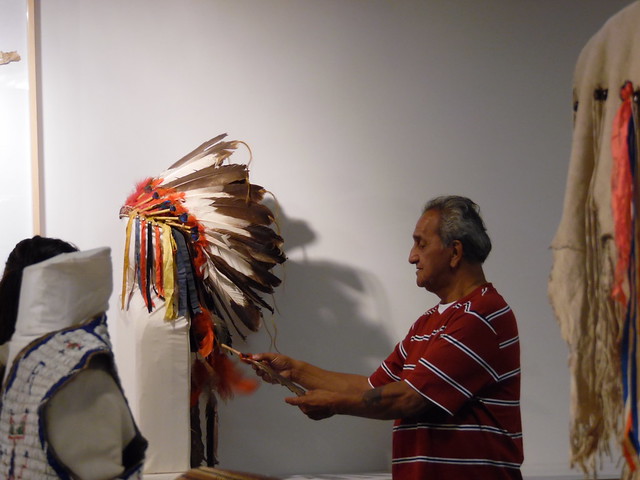
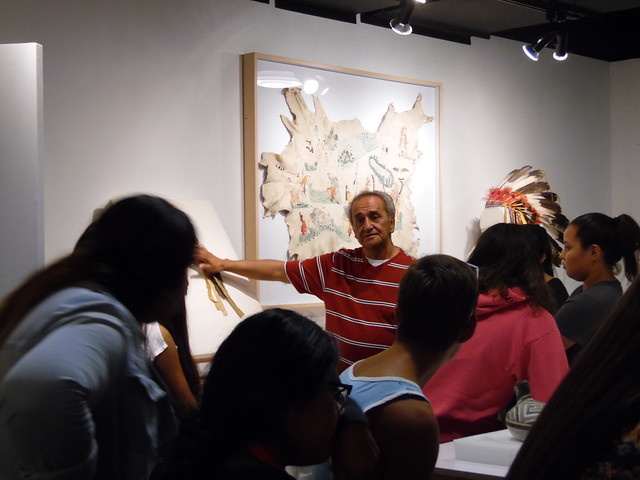
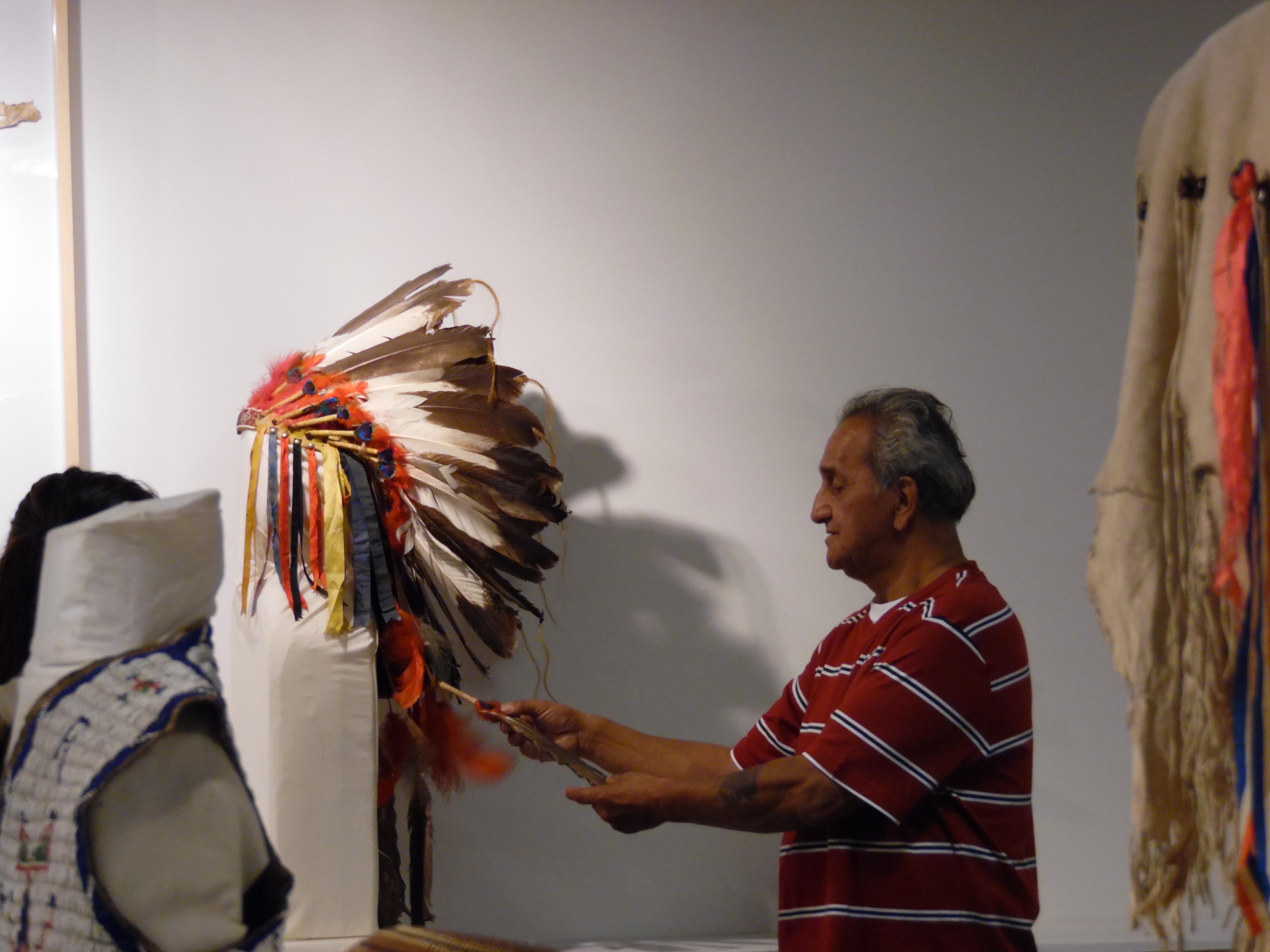
Uncle Bingo. You inspired us all today when you walked into the room that was ever so delicately prepared. Room temperature controlled. Gloves on the hands of the Caucasian anthropologist. Sweat on her temple. She was just about to present something to a ‘buncha Indians’ she knew nothing about. However, she had purpose. Good intentions stirred. Walking in, you raised your hands and gently caressed that medicine jacket. Her eyes widened. Her heart rate swiftly swelled. Twice its normality it was, now. Your act demonstrated OUR purpose. You taught her that our people’s presence isn’t simply that of an artifact sitting in a refrigerated room. We are not their test subjects. We are not ancient pieces of stone to simply be glared at. We are living, breathing, epidermis yielding souls who know how to honor our every existential moments. We want our “artifacts” back, for we see them as more. Our people deserve to have their ancestor’s clothing, just as much as we deserve to remain buried. We do not go uncovering their graves and hanging up their army jackets as war spoils in our museums. Simply put, WE ARE PRESENT AND WE WANT OUR MATERIALS RETURNED.
museums

Native culture can go hand in hand with education in many ways like if you want to study your culture or if you want to protect it. You can go to college and become whatever you want and then go back home and work for your tribe to make  it a better place. I know many people who have went to college and came back to better their tribe. I know my brother is going to school in Kansas and I think he is on his last year this year but after he gets his degree he is enlisted in the army so he will be doing his four years as an engineer. I personally would like to do that but the field i want to go in wont benefit my tribe but i will certainly try. I want to do everything i can to better my tribe.

https://www.flickr.com/photos/mediacommunity/19759058455/in/photostream/

https://www.flickr.com/photos/mediacommunity/19751814332/in/photostream/

Day 5

https://www.flickr.com/photos/mediacommunity

1) I thought It was pretty cool to see the medicine jacket because I never seen one up close and gotten to observe It. It even gave me the chills at one point. I was kinda upset to because the person that was showing us all around didn’t really know much about any of the artifacts.

2) The thing that I’m looking into is child development and the way it can relate to college is if there is a kid who is taught who they are at a young age it is better then waiting for someone to tell you who you are or let the society tell them who they are.

3) Today was interesting because I was touched that one of the elders gotten to have an unforgettable experience at seeing some old artifacts. I also liked when I gotten to see how other tribes made things different.

#peachesforlife

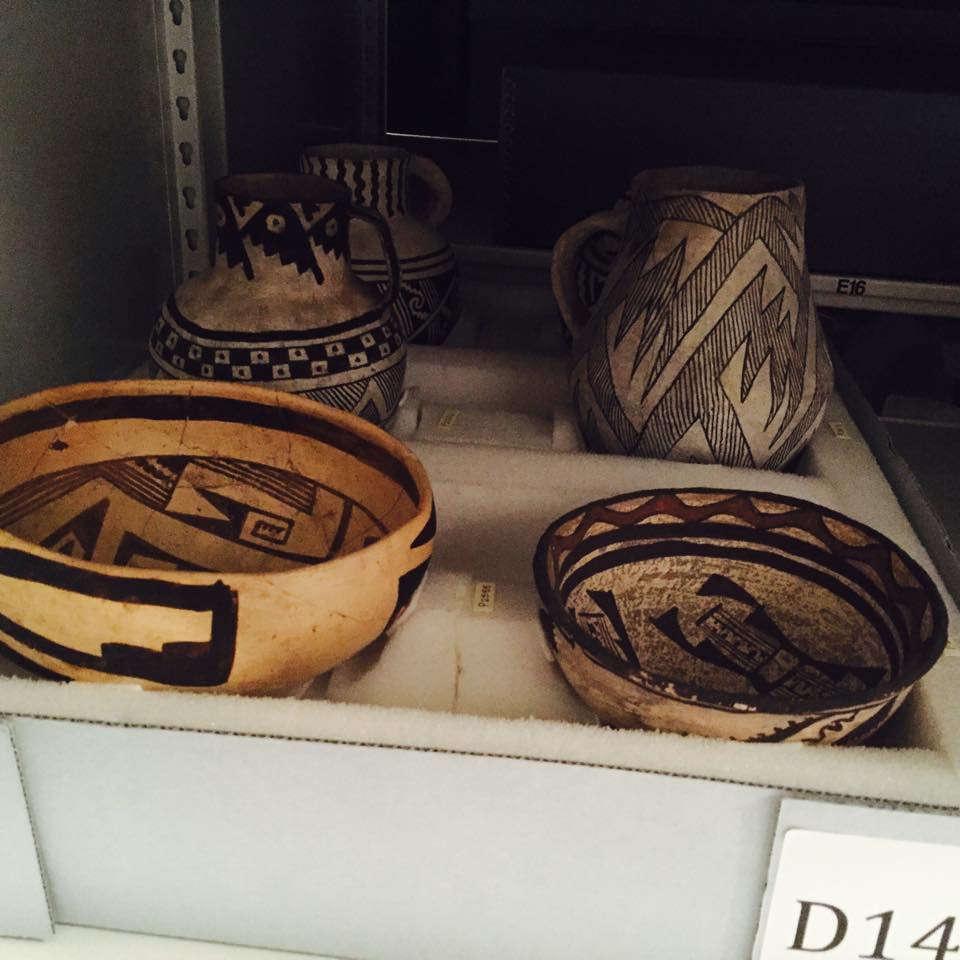
Today we went to a basement museum, filled with hundreds of Native Artifacts. At first I was so amazed at how much the curators of this small storage space had collected all of these ancient pieces from so many different nations. It was shocking and the artifacts were so amazing I was speechless for the longest time. After our little field trip Bingo mentioned that it was sad that they were kept there, being watched over by people that weren’t the owners or the tribe of the late owner, and that they should be returned. And they should, the curator said that if anyone had proof that these pieces belonged to their tribe or their ancestors then the museum would give them back. These artifacts below would be my favorite, not only because of their Native heritage but because of how beautiful they looked when I went on a tour by myself. I have more pictures but i like these bowls and pitchers more because of their designs.

Native1

Native Culture and College Education can go together, they have created majors and minors about the Culture of aboriginals and Native Languages if you go to a native college. Plus, when I’m in school there is not a day that goes by that I don’t talk about Native American Culture.

My day was great and I didn’t close my eyes once, well maybe to blink but that was it. The basement storage that held Native Americans past’s was amazing even though everyone had sad thoughts on how these artifacts were found or collected. We had a presentation in the Western U class and I can honestly say that my group and I did great! It was easey peasey lemon squeezy.. now we just have reflection and then bed!!!! 🙂

#peachesforlife

1) 20150716_111132-1 This is my favorite artifact from the Pomona College Museum of a very special woven basket. What makes it special is that someone took a lot of patience and love to not only weave the basket, but to add the feathers and shells around the top of the basket. This basket is for someone of a high honor. Although I admire the work of art, it really does make me wonder why this special basket that has a lot of time, love, and history in it, is just sitting down in a basement of a college museum? What happened to the owner? How did the college get ahold of this artifact?

2) I think that yes, Native culture and college education can go together, as in learning our language, and our ways. Just like how spanish, french, italian, and many more cultures are in college education. So why can’t Native culture be included in schools?

3) My day was very, very, very eye-opening. I’ve been to many Native American museums and I’ve seen a lot of artifacts from many different tribes around the country but I never thought about how they got there, why they’re there and if its right that they are there. I’ve never ever thought about those questions until today when we went to the museum with Bingo, (Joe Thorne), and how he was asking the lady about how the college got the artifacts and if they were given to them or not. After that, I began to realize that its not right that museums around the country have our culture locked behind glass, displaying them for people to see and not knowing the significants behind the artifact. I think that we, the new generation, should do something about this, put an end to museums making money off of what they took from us, and acting as if these works of art are history, extinct, gone, when in reality we are still here, we still make these beautiful objects, they are still alive, we are still here. So I vow to bring my opinion on this topic back to my community and make a difference, have my community realize too, that having these personal belongings rot away in a basement is not right. They should be in their home, their land, and their territory, where they belong. ❤

Culture Is Never Forgotten

1. https://www.flickr.com/photos/mediacommunity/19732891406/in/photostream/

When I entered the pomona college museum I felt really happy. The reason I felt happy was because it was good to see and know that not all of our history is lost. The artifacts that I saw today resembled our people and their souls. I can truly say I felt their presence there with us. It was beautiful seeing that today and I can not stress that enough.  Nonetheless, seeing those artifacts there got me sad as well. It hurt me to see that besides the artifacts that were displayed in the room, there was plenty more artifacts in the next door room that were just locked away. They were being treated as if they were test animals. It is truly unbelievable, the amount of sacred artifacts that what stored away. Hundreds of artifacts that told the stories of many native american tribes. We were always told stories about the artifacts we saw today and probably never imagined to ever see such things. Of course it is appreciated that they treated the artifacts with such cautious and care, they even put on a glove before touching anything, but we would appreciate it even more if they return those artifacts back home.

2. Of course native culture and college education can bind together. Thats what education is for. Native culture is history and present, so why not teach native culture just like how US history is taught. US history is only few hundred years old, native culture has been around for thousands of years. An example of native culture and college education coming together is Pitzer College. I love how they take into consideration the culture of native american tribes in their education.

3. Today was a really impactful day for me and for all of us. It was a mixture of emotions, ranging from happiness, to sadness, to disappointment, to hope. After the pomona college trip we were able to reflect on it along side Bingo and Rose Henry. Before anything else, I want to thank Bingo and Rose Henry for their bravery at the Pomona College. I can only imagine the overwhelming emotions they experienced after seeing all of their ancestors and their own stuff locked and in a way hidden in a room. It takes great courage and I thank them for that. I really enjoyed the time that Bingo came into the museum because he shared with us more than anyone can about the artifacts that were present. I don’t know what was more exciting to see, Bingo touching all the artifacts or the face the woman made every time Bingo did so. It was truly an amazing experience to see being share the history of the artifacts that not even the woman knew about. It was an amazing day.

Cinco de Maya

Today was a lot of fun, like always. I got to hold Courage (Rose’s bird) again, and we did many fun activities with rhythm. I love making my friends come up with me to the frontof the class.

SAM_1063

To be honest, apart from my museum video, making breakfast was my favorite part of the day. We made potatoes, eggs with soy chorizo, toast, and chilaquiles with cotija cheese on the side. It was spicy and delicious. It was the first time I was super full from breakfast. Miahuatl is the bomb.

We had the best dinner of the whole program this evening! There was actually tons of food for vegetarians today (aka Ninaya and I). We had vegetarian lasagna, zucchini with red sauce, garlic bread, and cobbler-ish stuff for dessert. Today was a GOOD food day.

////////////////////////////////////////////////////////////////////////////////////////////////////////////////////////

Native Culture and college education can 100% go together, as it is so obviously seen in the Pipeline. It just takes the respect of our cultures and teachers that know the ways. To go together, there must be a balance of Western and Native learning.

Today we went to the Pomona College Museum of Native Artifacts. The works were amazingly beautiful, but we all had a realization that was kind of- upsetting. Everyone who worked there was white, and the woman admitted to us that she knew very little at all about the pieces. That was, until our elder Joe came in. He immediately explained the significance of so many of the artifacts, and the cultures they were from. The works were hundreds or thousands of years old, and they were sitting in drawers in a basement that few people visit. There was one piece that stood out to me a bit more than all the others; a piece from as far back as 3000 BCE. She told us she knew nothing about it but that it was an adornment which had been taken from a burial ground.

SAM_1114

When you bury your dead, your elders…. you are doing it so to lay their physical body for rest. In many cultures, it is a very sacred practice to bury the dead with adornments or their belongings for their trip back to the afterlife, to heaven, to the Creator. Joe is so wise. He said to us, “I often wonder how white people would feel if I dug up their dead and kept their belongings in my basement.” My mentor Miahuatl kind of laughed and said, “It’s funny how these things are ours and we’re not even allowed to touch it.”

Frankly, Joe didn’t care whether or not we weren’t supposed to touch it.

SAM_1082

SAM_1085

They need to go back to their homes.

Day Cinco (5)

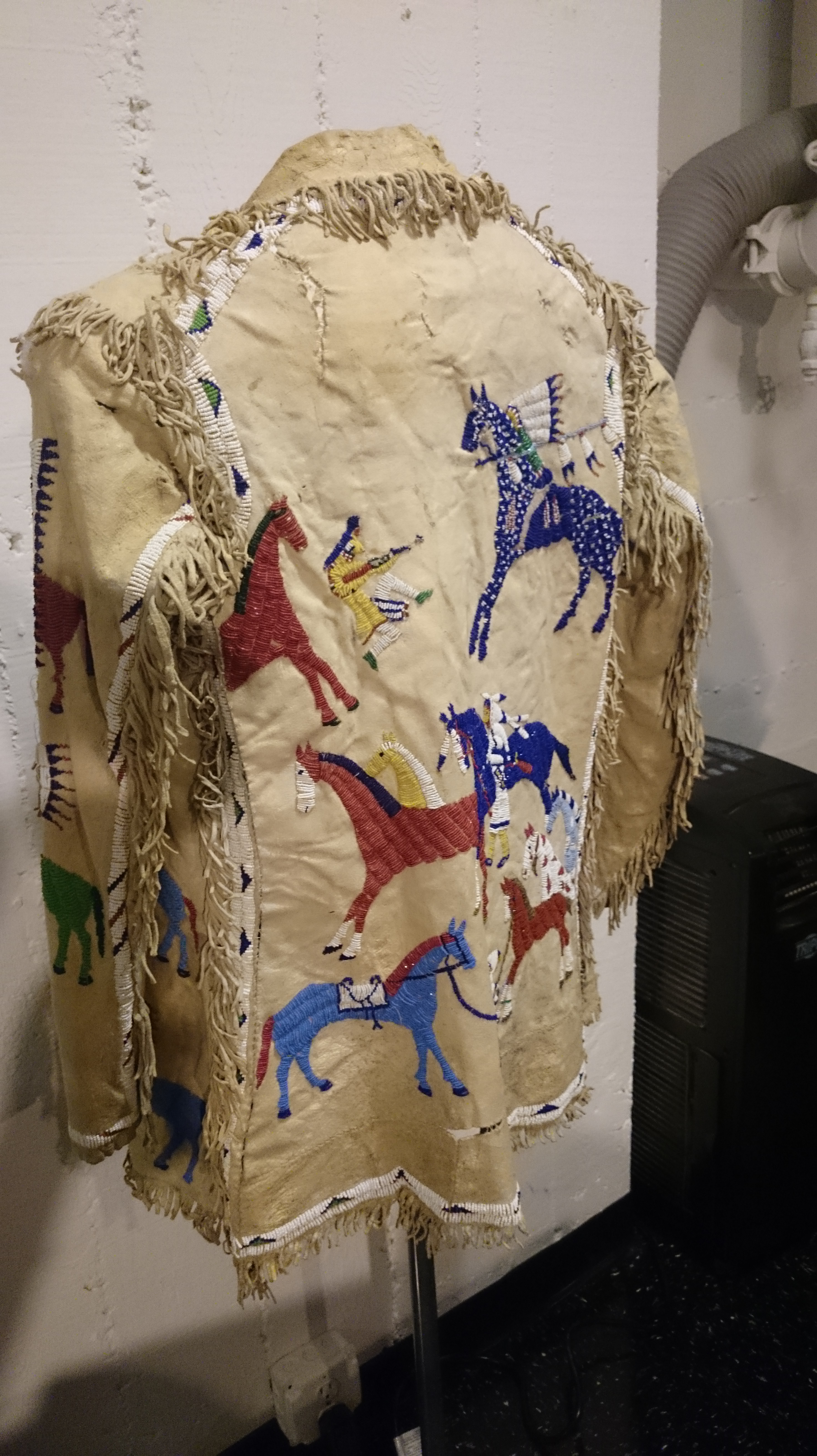
1) This was my favorite artifact from the Pomona College Museum. It is a medicine mans jacket. It was my favorite because I want to become a doctor someday, so I have a special connecting with anything with some sort of connection to any form of “medicine”, rather it be something indigenous, western, or simply anything that heals someone physically, psychologically, or spiritually. But seeing all these “artifacts” made me sad. Because in reality these aren’t artifacts. They’re the belongings of people, people who are alive and thriving to keep their culture, and still all these pieces of clothing, baskets, satchels, and other items are sitting in the basement of a college where few individuals know they are there. Sadly, the people working there didn’t know much about the artifacts themselves. If we didn’t have our elders there, we probably wouldn’t have learned much of anything because they were the ones to tell us the stories.

Medicine Man Jacket
Medicine Man Jacket

2) Native culture and college education can go alongside each other just fine. This can be done just fine as long as the cultural protocol is prioritized significantly. This is because I believe that much of the education in this country is very western, which can have many conflicts with the way that native culture is taught. The education system of many colleges must first be decolonized before it is ready for full blown education along side native culture.

3) Anyways, about today. Today was the first day that I awoke and felt that I actually got a good nights rest. Theatre today was mostly about vocalization, the practice of which helps with self-confidence significantly. The highlight of the day was of course the museum. That brought up so much to talk about, which I mentioned already. Besides that the lasagna today was great, and I’m really looking forward to tomorrow.

https://www.flickr.com/photos/mediacommunity/19732891406/

https://www.flickr.com/photos/mediacommunity/19759061405/

I liked when Bingo was telling us about these things and many others and I liked seeing how happy he was to see all the everything there.

I didn’t really like going to the museum, I’d like to learn more about items made by native americans from native americans instead of somebody that knew nothing about it. It upsets me to see somebody’s work just sit in a museum or just sitting in drawers in the back when it could be with the families of the people that made it. I like that they would give it back to the person or families that made it if the family wanted it but they probably don’t know about. I just think there’s too much there that’s unclaimed that could be with the person that made it. If I could learn about it a different way I’d be happy to, I would rather learn about it from someone that still does their work the same way or actually knows about it.

Native culture and college education could go together but I think one would take time from the other whether college is taking time from culture or vice versa but we would have to figure out how to balance both. Maybe you can do both.